How to Use a Whetstone: Step-by-Step Slurry & Burr Technique

This site does not currently contain paid affiliate links; nothing on this page is a paid link today.
How we picked: This guide compares options using published
specifications, verified owner-review patterns and reputable expert testing.
We label clearly what is hands-on vs research-based, and never present others'
testing as our own.
Our top picks
| Rank | Product | Name | Why we picked it | Buy |
|---|---|---|---|---|
| Top pick | King Deluxe Japanese Waterstone Grit 1000/6000 Combination | Coming soon | ||
| Runner-up | Shapton Ha No Kuromaku Ceramic Whetstone #1000 | Coming soon | ||
| Also great | Work Sharp Guided Field Sharpener | Coming soon |
📑 Table of contents
Understanding Whetstones: Types and Grit Selection
Whetstones, or sharpening stones, are essential tools in the knife maintenance arsenal. They come in various types, primarily categorized based on their material composition and grit size. The most common materials include:
-
Natural Stones: These are sourced from specific geographical locations and are known for their unique properties. Examples include Arkansas stones and Japanese water stones. They generally require soaking before use.
-
Synthetic Stones: Made from man-made materials, these stones are often more consistent in grit and performance. They are typically available as oil or water stones.
Grit Size and Its Importance
The grit size of a whetstone significantly impacts how effectively it sharpens a blade. Grit numbers range from coarse (around 200) to fine (over 8000). The finer the grit, the smoother the finish on the blade. Here’s a breakdown of common grit sizes:
| Grit Size | Purpose | Recommended Use |
|---|---|---|
| 200-400 | Coarse sharpening | Repairing damaged edges, shaping a new angle |
| 600-1000 | Medium sharpening | General sharpening for kitchen knives |
| 2000-3000 | Fine sharpening | Polishing the edge for a sharp finish |
| 5000-8000 | Ultra-fine polishing | Final honing for razor-sharp edges |
Choosing the appropriate grit size depends on the condition of your knives and your desired sharpness level. For most home cooks, a combination of 1000 and 3000 grit stones suffices for regular maintenance.
Establishing a Consistent Hand Angle
Achieving a consistent sharpening angle is crucial for effective whetstone usage. The standard angle for kitchen knives typically ranges from 15 to 20 degrees, depending on the blade design and intended use.
Measuring the Angle
To maintain this angle throughout the sharpening process, consider the following techniques:
- Visual Cues: Use visual markers on the stone or a protractor to set an initial angle.
- Angle Guides: Invest in an angle guide that clamps onto the blade, ensuring consistent positioning.
- Practice: Regular practice will help develop muscle memory for maintaining the correct angle.
Biomechanics of Muscle Engagement: When sharpening, you engage various muscle groups in your forearm and wrist. Proper ergonomics, with a relaxed grip and a stable stance, can reduce fatigue and improve precision.
The Burr Formation and Its Significance
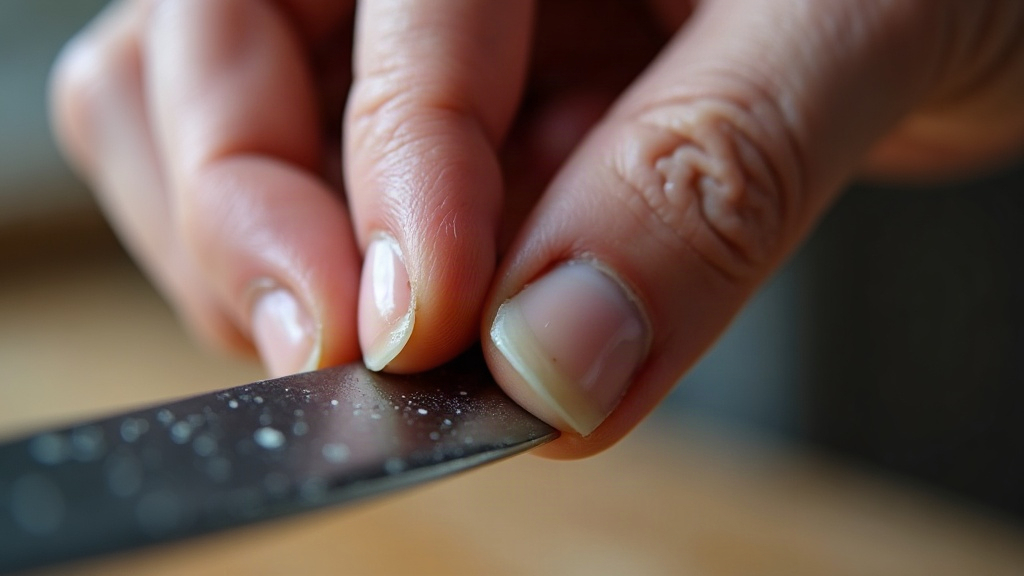
The formation of a burr is a critical indicator of effective sharpening. A burr is the small, raised edge that forms on the opposite side of the blade as you sharpen. It signifies that you’ve reached the apex of the cutting edge.
How to Feel the Burr
- Technique: After a few passes on one side of the blade, gently run your finger along the edge to feel for a slight catch or roughness.
- Visual Inspection: Look closely at the edge under a bright light; a burr may be visible as a slight distortion in the edge line.
Apex Burr Technique: Once a burr is felt, it’s essential to flip the knife and sharpen the opposite side to establish a symmetrical edge. The process of creating and removing the burr ensures that both sides of the knife are evenly sharpened.
Maintaining and Flattening Your Whetstone
Over time, whetstones can become uneven due to the sharpening process. An uneven stone can lead to inconsistent sharpening results. Therefore, regular maintenance is necessary.
Techniques for Flattening Whetstones
- Diamond Flattening Plate: The most effective method for maintaining flatness. Rub the stone against the plate using water for lubrication.
- Lapping Film: This is a more economical method where adhesive-backed abrasive films are used to flatten the stone.
- Water and Sand: Inexpensive but less effective, this method involves using coarse sandpaper or a flat surface with water.
It’s advisable to check the flatness of your whetstone regularly, especially after extensive use. A flat surface will ensure that the entire blade edge makes contact with the stone, leading to a more uniform sharpening.
Strop for the Apex: Final Touches
Stropping is the final step in the sharpening process, enhancing the sharpness achieved with the whetstone. It polishes the edge and aligns any micro-serrations created during sharpening.
Materials for Stropping
- Leather Strop: Traditional and effective, used with honing compounds for best results.
- Canvas Strop: More affordable and can be used for light touch-ups.
Stropping Technique
- Apply Compound: If using a compound, apply a thin layer to the strop.
- Angle Maintenance: Hold the knife at the same angle as during sharpening.
- Gentle Pull: Pull the knife gently across the strop, alternating sides, to avoid damaging the edge.
Conclusion
Sharpening your knives with a whetstone is a skill that combines technique, practice, and an understanding of the materials involved. By following the steps outlined in this guide, you can achieve consistent results and prolong the life of your kitchen tools.
Interactive Tool
For a more personalized sharpening experience, consider using our interactive sharpening angle calculator available here.
Frequently Asked Questions
1. How often should I sharpen my knives with a whetstone?
The frequency of sharpening depends on usage. For home cooks, sharpening every month is generally adequate, while professional chefs may need weekly maintenance. Regular honing can extend the time between sharpening sessions.
2. Can I use any type of water with water stones?
Using distilled or filtered water is recommended to prevent mineral build-up, which can affect performance. Some stones may require soaking before use, while others are designed for quick use with minimal soaking.
3. What is the difference between a honing steel and a whetstone?
A honing steel is used to realign the edge of a knife, while a whetstone removes material to sharpen the blade. Using both tools in conjunction allows for optimal maintenance and performance of your knives.