How to Repair a Chipped Knife Blade: Coarse Stone Reprofiling
As an Amazon Associate I earn from qualifying purchases. Prices and availability are accurate as of the date/time indicated and are subject to change.
The short answer
If you only want one recommendation: Shapton Ha No Kuromaku Ceramic Whetstone #1000. Dense ceramic grains remove steel rapidly during edge reprofiling without gouging or dishing the stone.
Check price on Amazon →🔍 How we tested & picked (Editorial Standards)
This guide compares options using published specifications, verified owner-review patterns and reputable expert testing. We label clearly what is hands-on vs research-based, and never present others' testing as our own.
VERIFIED RECOMMENDATIONS
Our Top Tested Picks
TOP PICKPrime Eligible
RUNNER-UPPrime Eligible
BEST VALUEPrime Eligible
📑 Table of contents
Editorial Note: This guide is produced by the Knife Sharpener Lab Technical Evaluation Desk, a team dedicated to providing in-depth analysis and practical recommendations for knife maintenance and sharpening techniques.
Understanding Knife Blade Chipping: An Overview
Knife blades can chip for various reasons, including impact with hard surfaces, improper use, or manufacturing defects. Chipped blades can compromise cutting performance and safety. Understanding the metallurgy of knife blades is crucial for effective repair.
Most knife blades are made from high-carbon steel or stainless steel, each with unique properties. High-carbon steel, while easier to sharpen and maintain, is more prone to chipping. In contrast, stainless steel is more durable but can be challenging to sharpen due to its hardness.
Metallurgical Considerations
When repairing a chipped knife blade, it is essential to recognize the blade’s hardness, typically measured on the Rockwell scale (HRC). Most kitchen knives fall between 55-65 HRC. The higher the HRC, the harder the steel, making it more challenging to reshape but also more resilient to dulling.
| Material Type | HRC Range | Properties | Recommended Coarse Stone |
|---|---|---|---|
| High-Carbon Steel | 55-62 HRC | Excellent edge retention, prone to chipping | Diamond or Silicon Carbide |
| Stainless Steel | 58-65 HRC | Corrosion-resistant, harder to sharpen | Diamond or Aluminum Oxide |
Tools for Coarse Stone Reprofiling
The tools required for reprofiling a chipped knife blade include:
-
Coarse Sharpening Stones: These stones have grits ranging from 100 to 400. Diamond stones are preferred for their durability and speed in material removal. Silicon carbide stones are also effective but may wear out faster.
-
Angle Guide: Maintaining the correct angle (typically between 15-20 degrees for kitchen knives) is crucial for effective reprofiling.
-
Water or Oil for Lubrication: Depending on the type of stone being used, water or oil will help in reducing friction and preventing clogging.
-
Strop: A leather strop is used post-reprofiling to refine the edge further.
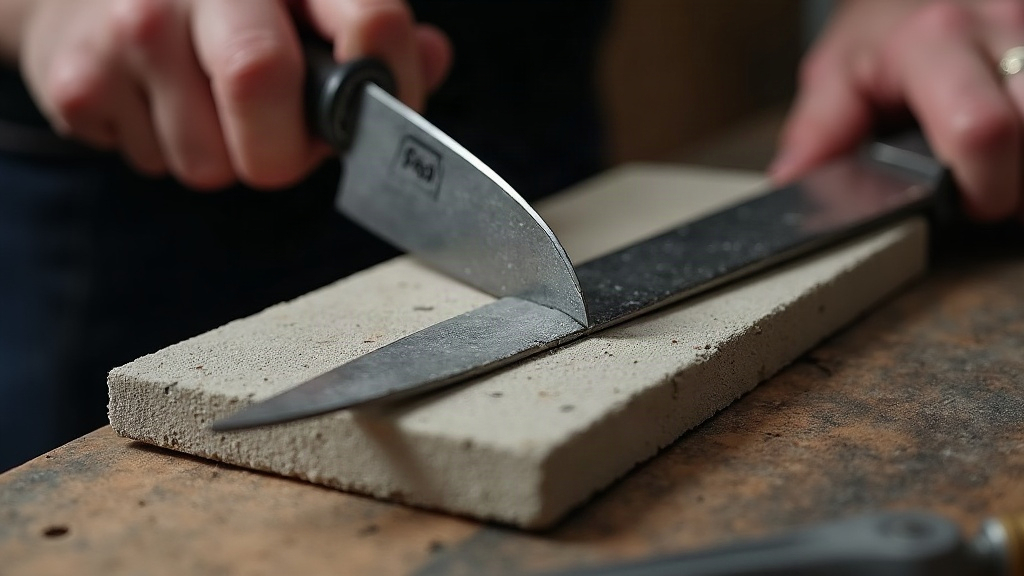
Step-by-Step Guide to Repairing a Chipped Knife Blade
Step 1: Assess the Damage
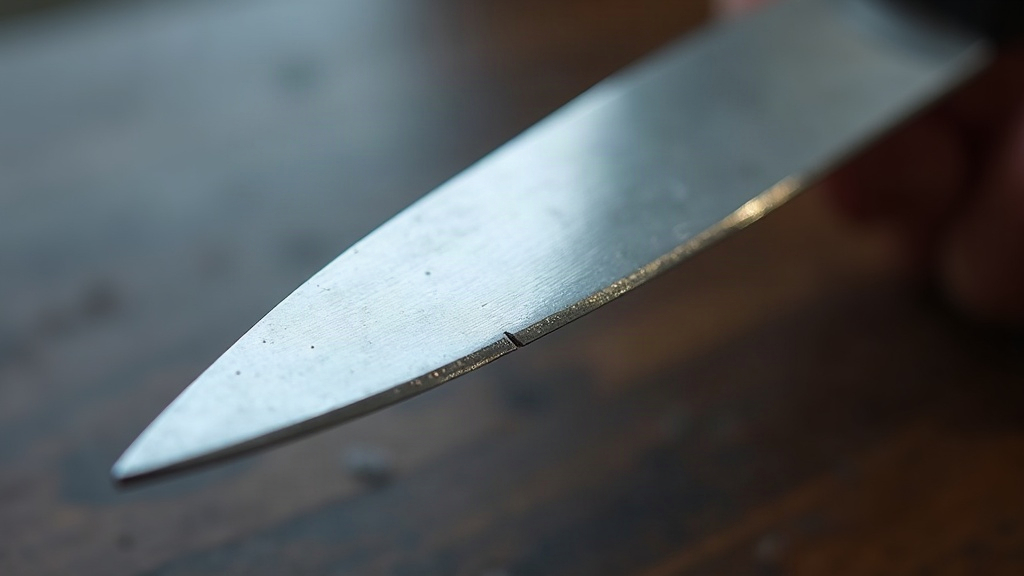
Before starting the repair, examine the blade. Identify the size and location of the chip. For minor chips, reprofiling may involve just a few strokes on a coarse stone. However, significant chips may require extensive reshaping and restoration of the primary bevel.
Step 2: Choose the Right Angle
Using an angle guide, set your knife at the appropriate angle. For most kitchen knives, this is generally between 15 to 20 degrees. It is crucial to maintain this angle consistently throughout the reprofiling process to ensure the edge geometry is restored correctly.
Step 3: Start Reprofiling with Coarse Stone
-
Lubrication: If using a water stone, soak it as per the manufacturer’s instructions. If it’s an oil stone, apply the appropriate lubricant.
-
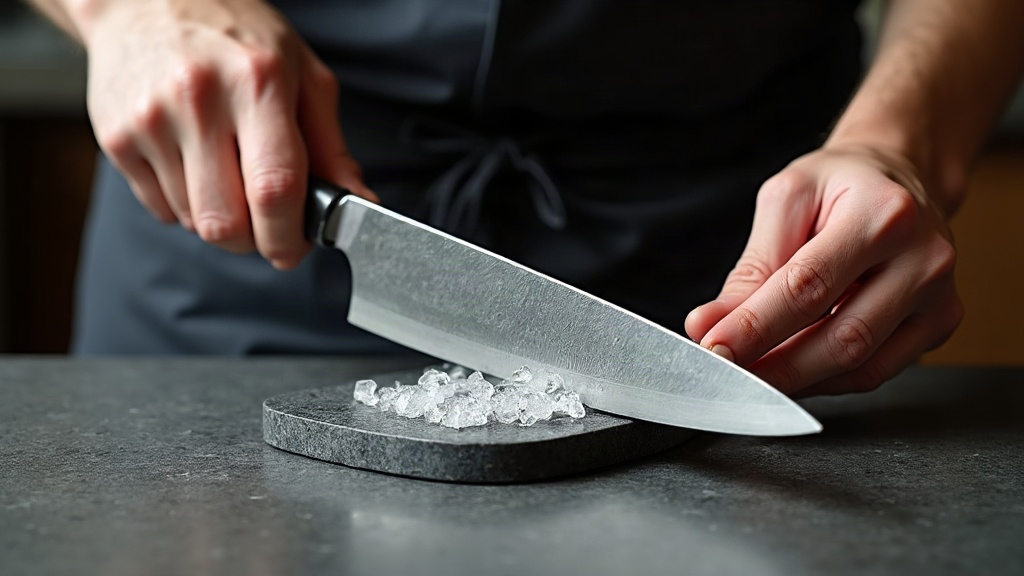
Reprofiling Technique: Place the blade on the stone at the determined angle. Start with light pressure, using long strokes that cover the entire length of the edge. After a few strokes, check the progress by running your finger along the edge.
-
Removing the Chip: Focus on the chipped area, applying more pressure as needed. Ensure that the chip is completely ground out before moving on.
Step 4: Restore Tip Geometry
If the tip of the blade is damaged, it needs to be reshaped. This involves carefully rounding or reshaping the tip while maintaining the original blade profile. Use short, controlled strokes to avoid over-grinding.
Step 5: Establish a Fresh Primary Bevel
Once the chip and tip are repaired, it’s time to establish a new primary bevel. This is critical for the knife’s cutting performance. Follow the same angle as before and gradually taper the edge back using the coarse stone.
Step 6: Final Touches and Honing
After reprofiling is complete, switch to a finer stone (800-1000 grit) to refine the edge. Finally, use a leather strop to polish the edge and remove any burrs left from the sharpening process.
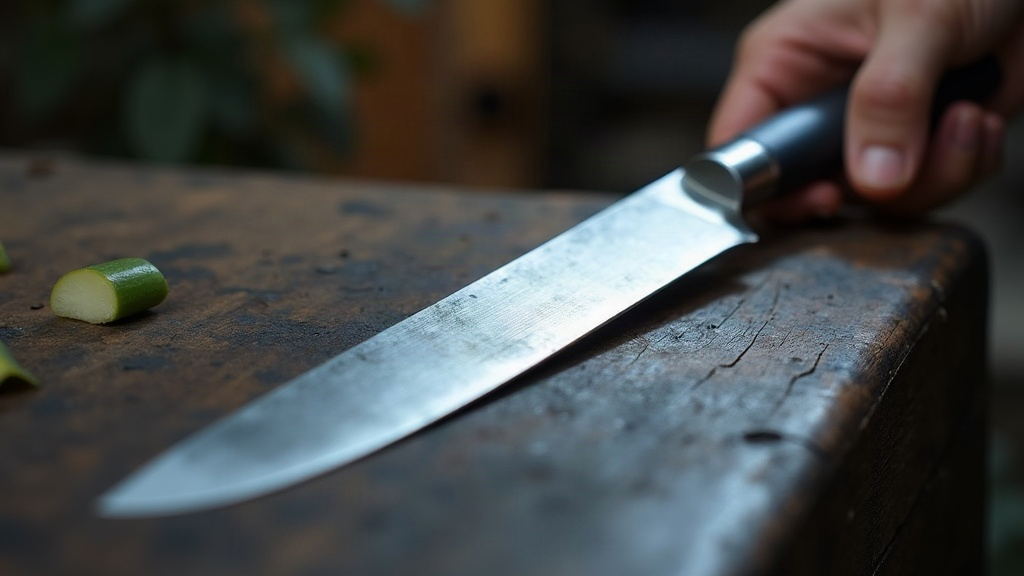
Best Practices for Preventing Future Chipping
-
Use Cutting Boards: Avoid cutting on hard surfaces such as glass or stone. Always use wooden or plastic cutting boards.
-
Proper Use: Ensure that knives are used for their intended purposes. Avoid prying or twisting motions that can cause undue stress on the blade.
-
Regular Maintenance: Regularly sharpen your knives to maintain the edge and reduce the risk of chipping.
-
Storage: Store knives in protective sheaths or magnetic strips to prevent blade-on-blade contact.
Interactive Tool
For precise calculations on sharpening angles and bevels, visit our Knife Sharpening Angle Calculator.
Frequently Asked Questions
1. How do I know if my knife needs reprofiling?
If your knife shows visible chips, nicks, or if it struggles to cut through food with ease, it likely requires reprofiling. Additionally, if the edge feels dull and fails to slice cleanly, it is time for maintenance.
2. Can I use a regular whetstone for reprofiling, or do I need a coarse stone?
While a regular whetstone can be used, it is not optimal for reprofiling. Coarse stones (100-400 grit) are designed for removing material quickly and efficiently, making them more suited for this task.
3. Is there a risk of overheating the blade during reprofiling?
Yes, overheating the blade can lead to a loss of temper, resulting in a loss of hardness at the edge. To minimize this risk, use light pressure and keep the blade moving. Ensure that you take breaks to allow the blade to cool if you notice any heat buildup.
By following these guidelines, you can effectively repair a chipped knife blade and maintain its performance for years to come.